
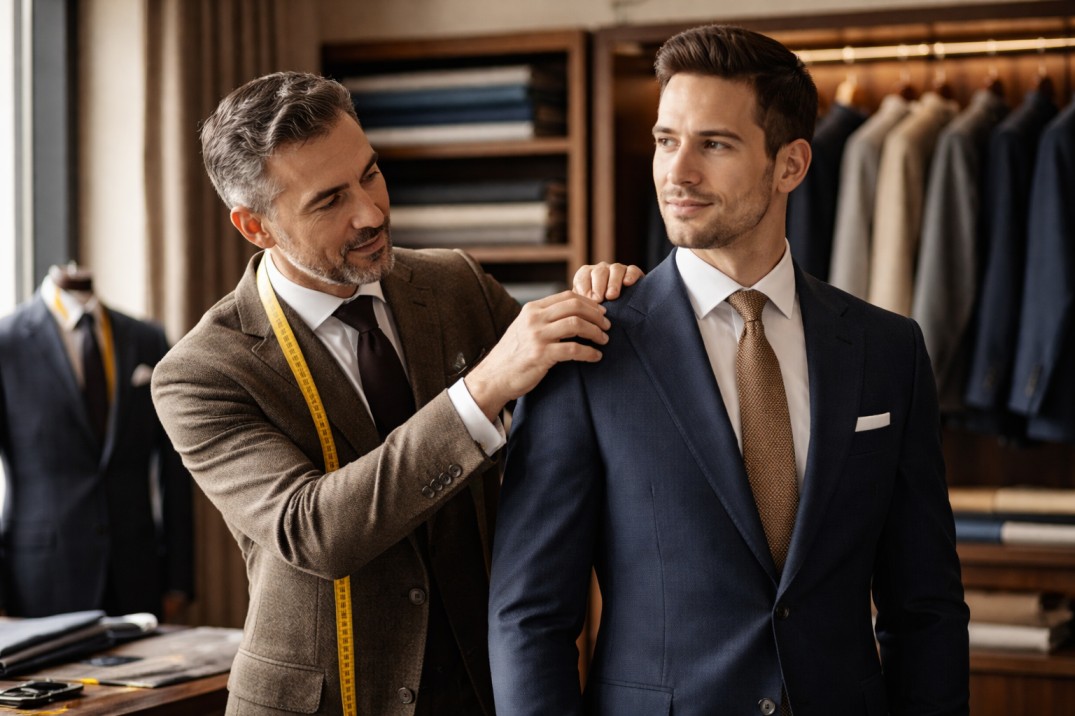
Walk into most clothing stores today and you’ll find racks filled with identical designs, standardized sizing, and quick purchase options. While this approach offers convenience, it often comes at the cost of individuality. In contrast, custom tailoring—once considered a niche luxury—is quietly regaining attention, not just as a fashion choice, but as a more thoughtful way to approach clothing.
The Problem with “Standard Sizes”
Off-the-rack sizing is built around averages, not individuals. Most garments are designed to fit a broad range of body types, which means they rarely fit anyone perfectly. This leads to common compromises:
- Sleeves that are slightly too long
- Jackets that pull at the shoulders
- Trousers that require multiple alterations
Over time, people begin to accept these imperfections as normal. But when clothing doesn’t align with the body, it subtly affects comfort and confidence.
A Different Approach: Clothing Built Around You
Custom tailoring flips this model. Instead of adjusting yourself to fit the garment, the garment is created to fit you. Measurements are taken carefully, and adjustments are made throughout the process to ensure precision.
This approach goes beyond simple sizing. It considers:
- Posture and stance
- Shoulder alignment
- Movement and comfort preferences
- Personal style choices
The result is not just a better fit, but a garment that feels natural to wear.
The Creative Process Behind Custom Tailoring
One of the most overlooked aspects of tailored clothing is the collaborative process. Unlike retail shopping, where decisions are made quickly, custom tailoring involves a series of thoughtful steps:
- Consultation – Understanding preferences, lifestyle, and intended use
- Fabric Selection – Choosing from a wide range of materials with different textures and weights
- Design Customization – Lapels, linings, buttons, and subtle details
- Fittings and Adjustments – Refining the garment for accuracy
This process transforms clothing from a product into a project—something shaped over time rather than picked up in minutes.
Quality vs. Quantity
Mass production prioritizes speed and scale. Custom tailoring, on the other hand, emphasizes craftsmanship. This difference becomes evident in several ways:
- Construction techniques that enhance durability
- Material sourcing from specialized mills
- Attention to detail in stitching and finishing
Rather than cycling through multiple lower-quality garments, many people are beginning to value fewer pieces that last longer and perform better.
The Psychological Impact of a Well-Made Suit
Clothing has a direct influence on how people perceive themselves. A well-fitted suit doesn’t just change appearance—it can alter posture, body language, and overall presence.
This effect is often described as subtle but noticeable:
- Standing a little straighter
- Moving with more ease
- Feeling more prepared in formal or important settings
These changes aren’t just about aesthetics; they reflect how clothing interacts with mindset.
Inclusivity in Modern Tailoring
Another important shift in recent years is the growing inclusivity within the tailoring space. Traditional menswear has expanded to accommodate a wider range of identities, body types, and personal expressions.
Custom tailoring plays a key role here because it doesn’t rely on rigid templates. Instead, it adapts to the individual—whether that means adjusting proportions, rethinking traditional silhouettes, or creating something entirely unique.
This flexibility allows more people to engage with formalwear in a way that feels authentic rather than restrictive.
Time as a Value Factor
In a world built around instant gratification, the idea of waiting several weeks for a garment might seem inconvenient. However, this time investment is part of what makes the end result meaningful.
The waiting period allows for:
- Careful construction
- Iterative improvements
- A more deliberate decision-making process
Rather than being a drawback, it often enhances appreciation for the final product.
Rethinking Modern Wardrobes
There’s a growing shift toward intentional wardrobes—collections of clothing chosen for purpose rather than impulse. Custom tailoring fits naturally into this mindset.
Instead of buying frequently, people are beginning to ask:
- Does this piece serve multiple occasions?
- Will it remain relevant over time?
- Does it reflect my personal style?
A well-made suit often checks all of these boxes, making it a cornerstone rather than an afterthought.
Exploring the Craft Further
For those curious about how tailored garments are designed and constructed, learning more about the process behind custom suits can offer valuable insight into what sets them apart from standard retail options.
Final Thoughts
The renewed interest in custom tailoring isn’t just about fashion—it’s about reclaiming individuality in a world of uniformity. As more people look for clothing that fits both their body and their identity, custom suits are becoming less of a luxury and more of a considered choice.
In the end, it’s not just about how a suit looks on a hanger, but how it feels when worn—and how it reflects the person inside it.