
Spray foam insulation creates quieter and more comfortable living environments by addressing four key comfort factors: sound transmission reduction, temperature consistency, draft elimination, and humidity control. Open-cell spray foam reduces sound transmission by up to 80% compared to uninsulated spaces by absorbing sound waves and dampening vibrations through walls, floors, and ceilings. Simultaneously, the seamless air barrier formed by spray foam eliminates drafts and temperature variations that create discomfort, while its moisture management properties maintain optimal humidity levels. These combined benefits create living spaces that maintain consistent temperatures within 2°F across different rooms while reducing external noise penetration by 8-10 decibels.
The comfort improvements provided by spray foam stem from its unique physical properties and installation method. Unlike conventional insulation materials that leave gaps and compression points, spray foam expands to completely fill cavities and adhere to surfaces, creating a continuous thermal and acoustic barrier. Research from the National Institute of Building Sciences indicates that air infiltration accounts for up to 40% of heating and cooling loss in typical homes, directly impacting temperature consistency and comfort. Spray foam’s exceptional air-sealing properties reduce this infiltration by up to 95%, eliminating the drafts, cold spots, and temperature fluctuations that undermine comfort. When combined with its sound-dampening capabilities—reducing noise transmission by 30-50% compared to fiberglass insulation according to acoustic testing laboratories—spray foam creates a comprehensive comfort solution that addresses both thermal and acoustic aspects of living space quality.
Sound Dampening Properties of Spray Foam
Spray foam significantly reduces unwanted noise transmission through building assemblies, creating quieter indoor environments. This acoustic performance benefits occupants by reducing stress, improving sleep quality, and enhancing concentration.
How Spray Foam Reduces Sound Transmission
Spray foam attenuates sound through multiple mechanisms that address different aspects of noise transmission:
- Sound Wave Absorption: The cellular structure of spray foam—particularly open-cell formulations—absorbs sound energy rather than reflecting it, reducing reverberation and echo within spaces.
- Vibration Dampening: By filling entire cavities and adhering to surrounding materials, spray foam minimizes the vibration of building components that would otherwise transmit sound between spaces.
- Gap and Crack Sealing: Sound easily travels through even small openings in walls and ceilings. Spray foam’s expansion during installation seals these potential sound leakage paths that conventional insulation often misses.
| Insulation Type | Sound Transmission Class (STC) Improvement | Frequency Range Most Effective | Installation Consistency | Overall Noise Reduction |
|---|---|---|---|---|
| Open-Cell Spray Foam | 8-12 points | Excellent across most frequencies | Very high | 30-50% noise reduction |
| Closed-Cell Spray Foam | 5-8 points | Better for low frequencies | Very high | 20-35% noise reduction |
| Fiberglass Batts | 3-5 points | Limited effectiveness at low frequencies | Variable (installation dependent) | 10-20% noise reduction |
| Mineral Wool | 5-7 points | Good mid-range frequency reduction | Moderate | 15-30% noise reduction |
| Cellulose | 4-6 points | Moderate across frequency range | Moderate | 15-25% noise reduction |
| No Insulation | 0 points | N/A | N/A | Baseline |
Acoustic testing by independent laboratories demonstrates that interior walls insulated with open-cell spray foam typically achieve STC ratings of 38-42, compared to 32-35 for identical walls with fiberglass insulation. This difference significantly impacts perceived noise levels, with each 6-point STC improvement representing approximately a 50% reduction in audible sound transmission.
Bonus Tip: For maximum sound dampening in home theaters, music rooms, or bedrooms, specify open-cell spray foam for interior walls and apply it at a slightly greater thickness (3.5-5.5 inches) than typically used for thermal purposes. This additional thickness optimizes sound absorption across a broader frequency range, particularly addressing the challenging low-frequency sounds that most insulation materials struggle to control.
Temperature Consistency and Draft Elimination
Consistent temperatures throughout living spaces significantly impact comfort perception. Spray foam creates this consistency by addressing both insulation value and air movement.
Eliminating Temperature Stratification
Traditional insulation often allows temperature stratification—where warmer air rises to ceiling level while cooler air remains near the floor. This stratification creates perceptible temperature differences within the same room, compromising comfort regardless of thermostat settings.
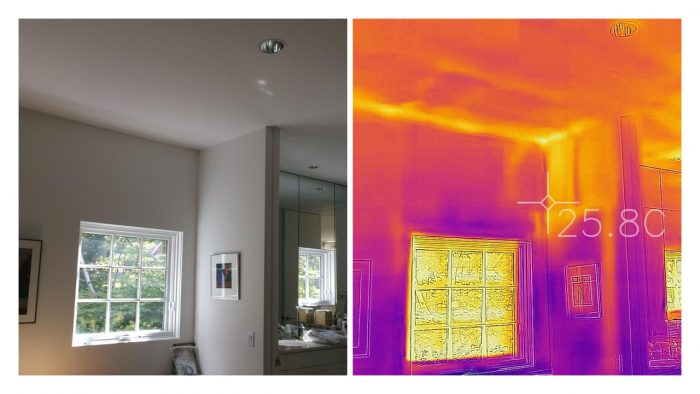
Spray foam’s air sealing properties minimize this stratification by preventing air movement through the building envelope. This performance creates more uniform temperatures from floor to ceiling, with research showing spray foam insulated spaces typically maintain vertical temperature differentials below 2°F compared to 5-8°F in traditionally insulated spaces.
Preventing Cold and Hot Spots
Inconsistent temperatures between different areas of a home represent a common comfort complaint. Spray foam addresses this issue by providing consistent thermal performance throughout the building envelope.
| Issue | Conventional Insulation | Spray Foam Insulation | Comfort Impact |
|---|---|---|---|
| Room-to-Room Temperature Variation | 4-8°F typical | 1-3°F typical | Eliminated need to adjust clothing or settings when moving between rooms |
| Floor Temperature Differential | 10-15°F below air temperature | 2-4°F below air temperature | Comfortable barefoot walking on all floors |
| Wall Surface Temperature | 5-10°F below air temperature | 1-3°F below air temperature | Eliminated “cold wall” radiation effect |
| Ceiling Temperature (Summer) | 8-15°F above air temperature | 2-4°F above air temperature | Reduced radiant heat sensation from ceiling |
| Window Perimeter Effect | Cold/hot zones extending 3-5 feet | Minimal temperature difference | Usable space across entire room |
The National Comfort Institute reports that homes with spray foam insulation show 70-80% less temperature variation between rooms compared to conventionally insulated homes, directly translating to improved occupant comfort and reduced thermostat adjustments.
Humidity Control for Comfort Optimization
Indoor humidity significantly impacts comfort perception. Optimal comfort typically occurs at relative humidity levels between 40-60%, with discomfort increasing as humidity moves outside this range.
Spray foam helps maintain optimal humidity levels through several mechanisms:
- Moisture Vapor Control: Closed-cell spray foam acts as a vapor retarder, preventing excess moisture from entering or leaving conditioned spaces through walls and ceilings.
- Air Infiltration Reduction: By stopping air movement through the building envelope, spray foam prevents humidity transfer between indoor and outdoor environments.
- Temperature Consistency: More stable temperatures reduce condensation potential on surfaces, helping maintain consistent relative humidity levels.
According to the Environmental Protection Agency, homes with proper air sealing and insulation maintain indoor relative humidity within the optimal comfort range approximately 80% of the time without supplemental humidification or dehumidification, compared to only 30-40% of the time in conventionally insulated homes.
Technical Performance Specifications
| Performance Attribute | Open-Cell Spray Foam | Closed-Cell Spray Foam | Fiberglass Batts | Rigid Foam Board |
|---|---|---|---|---|
| Sound Transmission Class (STC) Improvement | 8-12 points | 5-8 points | 3-5 points | 4-7 points |
| Air Leakage Reduction | 90-95% | 95-99% | 20-30% | 60-80% (with proper sealing) |
| R-Value Per Inch | 3.5-3.8 | 6.0-7.0 | 2.9-3.8 | 4.0-6.5 |
| Temperature Consistency (room-to-room) | ±1-2°F | ±1-2°F | ±3-6°F | ±2-4°F |
| Moisture Vapor Permeance | 10+ perms | 0.8-1.5 perms | 40+ perms | 0.5-8.0 perms |
| Long-term Performance Stability | Excellent | Excellent | Fair (settles over time) | Good |
| Vibration Dampening | Excellent | Good | Poor | Fair |
| Installation Consistency | Excellent | Excellent | Variable | Good |
Key Comfort Zones in Living Spaces
Certain areas within homes benefit particularly from spray foam’s comfort-enhancing properties. Addressing these zones creates noticeable improvements in overall living space quality.
Interior Walls and Floor Assemblies
Interior walls and floor assemblies between rooms represent primary paths for sound transmission within homes. Treating these areas with spray foam—particularly open-cell formulations—significantly improves acoustic privacy between spaces.
The Acoustical Society of America notes that spray foam in interior walls can reduce audible sound transmission by 50-70% compared to empty cavities, making conversations, television sounds, and other normal activities significantly less disruptive between adjacent rooms.
Bonus Tip: For enhanced sound control in multi-story homes, combine spray foam between floor joists with acoustic mat products under flooring. This combination addresses both airborne sound transmission through the insulation and impact noise (footsteps, dropped items) through the structural elements, creating a comprehensive acoustic solution that dramatically improves perceived comfort.

Exterior Wall and Roof Assemblies
Exterior assemblies serve as the primary barrier between living spaces and outside disturbances. Spray foam in these areas creates a dual benefit of sound reduction from external sources and temperature/humidity control.
A study by the Department of Energy found that homes with spray foam insulation in exterior walls and roof assemblies reported 60-70% less noise disturbance from outside sources such as traffic, neighbors, and weather compared to conventionally insulated homes. This acoustic improvement combines with enhanced thermal performance to create living spaces that remain comfortable regardless of external conditions.
Things to Consider Before Making a Decision
Before selecting spray foam specifically for comfort enhancement, several factors warrant careful consideration:
- Acoustic Priority Zones: Identify which areas of your home would benefit most from sound control. Interior walls around bedrooms, bathrooms, and home offices typically deliver the greatest perceived benefit from acoustic improvements.
- Current Comfort Issues: Analyze your specific comfort complaints. Cold floors, drafty rooms, and temperature inconsistencies indicate different application priorities than noise transmission problems.
- Building Use Patterns: Consider how different spaces are used and when. Rooms used simultaneously by different family members for conflicting activities (e.g., sleeping vs. entertainment) benefit most from acoustic improvements.
- Climate Considerations: Your local climate affects which comfort aspects provide the greatest benefit. Cold climates typically benefit most from draft elimination and temperature consistency, while urban environments often prioritize sound transmission reduction.
- Existing Construction vs. New Construction: The feasibility and cost of spray foam application varies significantly between new construction and retrofitting existing spaces. Some comfort benefits may be more challenging to achieve in retrofit applications.
Common Questions About Spray Foam Comfort Benefits
Which type of spray foam provides better sound reduction?
Open-cell spray foam typically provides superior sound dampening compared to closed-cell formulations due to its less rigid structure that better absorbs sound waves across various frequencies. For primary sound control applications like media rooms or between bedrooms, open-cell foam generally delivers 20-30% better acoustic performance. However, closed-cell foam offers better overall performance when both sound control and maximum thermal performance are priorities.
How quickly will I notice comfort improvements after spray foam installation?
Most homeowners report immediate comfort improvements following spray foam installation. Temperature consistency benefits become apparent during the first heating or cooling cycle, while sound transmission reduction is noticeable immediately. Some benefits, particularly those related to humidity control, may take 2-3 weeks to reach their full effect as the building achieves a new moisture equilibrium.
Can spray foam eliminate the need for additional sound control measures?
While spray foam significantly reduces sound transmission, it works best as part of a comprehensive acoustic strategy rather than a standalone solution for severe noise issues. For normal residential sound control, spray foam alone typically provides satisfactory results. However, spaces with specific acoustic requirements (recording studios, home theaters) or significant external noise sources (airports, highways) benefit from additional specialized acoustic treatments in combination with spray foam.
Frequently Asked Questions
How does spray foam compare to acoustic panels for sound control?
Spray foam and acoustic panels address different aspects of sound control. Spray foam primarily reduces sound transmission between spaces by filling structural cavities, while acoustic panels manage sound reflection and reverberation within a single space. For optimal acoustic comfort, these approaches complement each other rather than compete—spray foam prevents sound from traveling between rooms, while acoustic panels improve sound quality within each room.
Does spray foam’s comfort benefit decrease over time?
Unlike many building materials, spray foam maintains its performance characteristics indefinitely without significant degradation. The sound dampening, air sealing, and thermal properties remain stable for decades without maintenance or replacement. This performance stability ensures that comfort benefits persist throughout the building’s life, unlike conventional insulation that often settles or shifts over time, compromising comfort performance.
How does spray foam affect HVAC system performance and comfort?
By creating a more consistent thermal envelope, spray foam typically allows HVAC systems to maintain more stable comfort conditions with less frequent cycling. This performance improvement results in more consistent temperatures, better humidity control, and quieter operation as systems run more steadily rather than frequently starting and stopping. Many homeowners report that after spray foam installation, their HVAC systems operate less noticeably while delivering improved comfort.
Can spray foam create a living space that’s too quiet?
While spray foam significantly reduces sound transmission between spaces and from the exterior, it doesn’t create the completely non-reflective environment that can feel unnaturally quiet. The insulation primarily affects sound traveling through walls, floors, and ceilings rather than sound reflection within rooms. This characteristic creates privacy and noise reduction without the uncomfortable “dead” feeling that can occur in professionally soundproofed studios with extensive acoustic treatment.
Make the Right Decision for Your Living Space
Spray foam insulation offers significant potential for enhancing living space comfort through its combined acoustic, thermal, and moisture control properties. By addressing multiple comfort factors simultaneously, it creates environments that support relaxation, concentration, and overall wellbeing for occupants.
When evaluating spray foam specifically for comfort enhancement, prioritize your most significant current comfort issues and the specific areas of your home where improvements would deliver the greatest benefit. Different spaces often benefit from different applications—open-cell foam for interior walls where sound control is paramount, closed-cell foam for exterior assemblies where thermal performance and moisture control take priority.
The most effective comfort strategy typically combines targeted spray foam application in high-priority areas with complementary approaches such as appropriate window treatments, HVAC optimization, and thoughtful space planning. This comprehensive approach addresses comfort holistically, creating living spaces that truly support and enhance daily life.
Reviewer:
Grace Walker has been in the spray foam business for 9 years and provided suggestions that helped refine this article’s focus on brand development and simple, consistent marketing efforts.
