

When it comes to replacing or upgrading your home heating system, one of the most important decisions you’ll face is choosing between aluminium radiators and traditional steel panels. It’s a choice that affects not just your immediate comfort, but your heating bills for the next two decades, your home’s compatibility with future heating technology, and ultimately how much you’ll spend on maintenance and energy over the radiator’s lifetime. While steel radiators have dominated British homes for generations, aluminium is rapidly gaining ground among homeowners who’ve done their homework. Understanding the real differences between these materials—beyond marketing claims and surface-level comparisons—helps you make the right choice for your specific situation.
The Fundamental Material Differences That Actually Matter
At the heart of this decision lies basic physics: aluminium and steel behave very differently when it comes to heat transfer. Aluminium has a thermal conductivity of approximately 205 W/m·K, while steel manages only about 50 W/m·K. In practical terms, this means aluminium conducts heat roughly four to five times faster than steel. When hot water flows into an aluminium radiator, the surface temperature responds almost instantly. With steel, there’s a noticeable lag as heat slowly conducts through the thicker, less conductive metal.
This speed difference transforms how radiators perform in real-world conditions. Traditional steel panel radiators contain substantial volumes of water—typically 10-15 litres per unit—all of which must reach operating temperature before the radiator can effectively warm your room. Aluminium radiators, by contrast, contain just 2-4 litres. You’re heating a fraction of the water volume, and the metal itself responds to temperature changes almost immediately rather than gradually over 20-30 minutes.
The weight difference between these materials is equally significant. Steel radiators are heavy—a large panel radiator might weigh 35-50 kilograms when filled with water. The equivalent aluminium unit could weigh half that or even less. This matters for installation on internal stud walls where weight capacity is limited, for upper-floor installations where carrying heavy radiators upstairs is physically demanding, and for anyone considering DIY installation who’d prefer not to wrestle with equipment weighing as much as a small adult.
Corrosion characteristics differ fundamentally between these metals. Steel rusts when exposed to oxygen and moisture, creating the familiar reddish-brown oxidation we all recognize. This happens both externally (visible rust on radiator surfaces) and internally (sludge that accumulates in the system). Aluminium doesn’t rust in the traditional sense, but it can undergo galvanic corrosion when in electrical contact with dissimilar metals in the presence of water. This requires different protective measures—specifically, pH-neutral corrosion inhibitor rather than the standard products designed for steel-only systems.
How Response Time Affects Your Daily Comfort and Costs
The speed at which radiators respond to heating system changes might seem like a minor convenience factor, but it fundamentally alters both comfort levels and energy consumption patterns. Consider a typical morning heating cycle: you’ve programmed heating to start at 6:30 AM, expecting warmth by the time you wake at 7:00 AM. With traditional steel radiators, the system fires up, water begins circulating, but for the first 30-40 minutes, most energy goes into heating the thermal mass of the radiators themselves rather than warming your rooms. You might not feel comfortable warmth until 7:15 or 7:30 AM.
Aluminium radiators change this equation dramatically. When heating activates at 6:30 AM, you’re feeling noticeable warmth by 6:45 AM, with full comfort achieved by 7:00 AM. This isn’t just convenience—it’s a fundamental efficiency gain. You’re running your heating system for less time to achieve the same comfort outcome. Over a typical heating season with two daily heating cycles, this time difference accumulates to dozens of hours of eliminated runtime, translating directly into lower fuel consumption.
The evening scenario is equally revealing. You arrive home to a cold house at 6:00 PM and want warmth quickly. With steel radiators, you’re waiting 45 minutes to an hour for comfort, leading many people to simply leave heating on all day to avoid this discomfort—completely defeating the purpose of time-based controls. Fast-response aluminium radiators bring rooms to comfortable temperatures within 15-20 minutes, making strategic heating genuinely practical. You can heat spaces only when occupied without sacrificing comfort, capturing significant energy savings that simply aren’t available with slower-response systems.
Temperature overshoot represents another hidden cost of slow-response radiators. When your thermostat detects the target temperature and signals heating to stop, steel radiators continue radiating stored heat for 20-30 minutes, often pushing room temperatures 2-3°C above the setpoint. This wastes energy that radiates straight out through windows and walls. Aluminium radiators stop emitting heat almost immediately when water flow ceases, maintaining tight temperature control that eliminates overshoot waste. Industry estimates suggest this overshoot elimination alone can save 5-8% on heating costs—£60-100 annually for typical households.
The Heat Pump Compatibility Factor You Cannot Ignore
Britain’s heating infrastructure is undergoing a generational transformation that will affect every home over the next decade. Gas boilers are being phased out, with new installations banned from 2035 and existing boilers expected to transition to heat pumps or other low-carbon alternatives by 2050. This isn’t speculation—it’s legislated policy with billions in government funding allocated to support the transition. The radiator choice you make today determines whether your home is ready for this transition or faces expensive, disruptive upgrades when it arrives.
Heat pumps operate fundamentally differently from gas boilers. While boilers easily heat water to 70-80°C, heat pumps work most efficiently at 35-50°C. This dramatic temperature reduction creates a massive problem for traditional steel radiators designed for high-temperature operation. A steel panel radiator rated at 6,000 BTUs with 70°C water might produce only 3,500 BTUs with 45°C water—a 40% output reduction that leaves rooms inadequately heated.
The standard solution is oversized radiators—units 50-80% larger than originals to compensate for reduced water temperature. This creates obvious problems in existing homes. Where do you find wall space for radiators 60% larger than current units? How do you deal with the visual impact of enormous radiators dominating living spaces? What about rooms where larger radiators simply won’t fit due to windows, doors, or furniture placement?
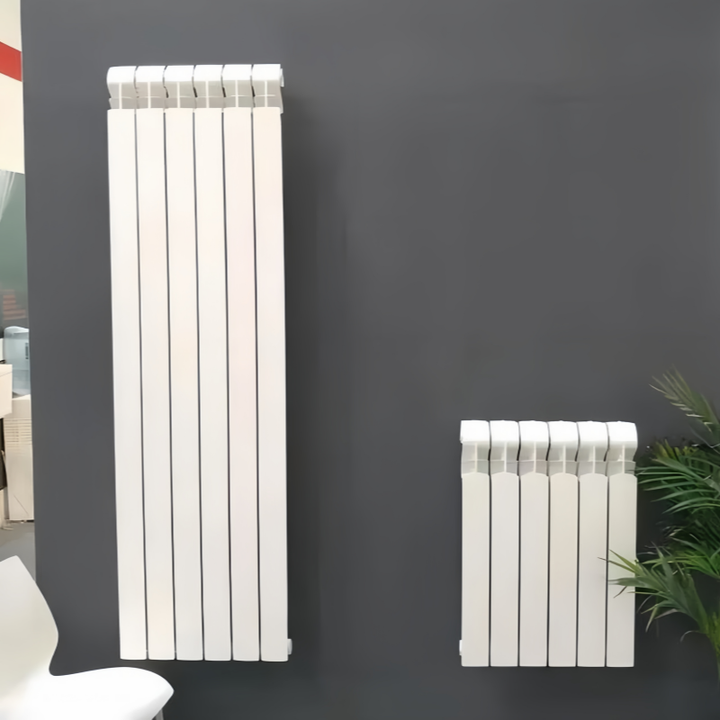
Aluminium radiators solve this compatibility challenge through superior thermal conductivity. Because aluminium transfers heat so effectively, these radiators maintain better output at lower water temperatures than equivalently-sized steel panels. Modern aluminium designs specifically engineered for low-temperature operation incorporate extensive finning and optimized geometries that maximize heat transfer at heat pump temperatures. You can often install normal-sized aluminium radiators where heat pump installers would require massive steel panels.
Installing heat-pump-compatible radiators now—even if your heat pump installation is years away—provides multiple benefits. You avoid the expense of simultaneous radiator and heat pump replacement when your boiler eventually fails. You position yourself to claim whatever government incentives exist at replacement time without needing additional work. You maintain flexibility to choose the best heating technology available rather than being constrained by radiator limitations. And you immediately benefit from the efficiency improvements aluminium provides with your current boiler, making it a win-win investment rather than a future-proofing cost.
Understanding the Real Cost Comparison Over Time
The price difference between steel and aluminium radiators appears substantial at first glance. Budget steel panels sell for £50-80, while quality aluminium alternatives cost £150-250—three to four times more. This upfront cost difference deters many homeowners who see the cheaper option as sensible, economical choice. This represents classic false economy that ignores the complete cost picture over realistic ownership periods.
Energy costs accumulate relentlessly over decades. An aluminium radiator costing £180 versus a steel panel at £60 represents a £120 premium. However, if that aluminium radiator’s superior efficiency saves £25 annually through reduced heating costs, you’ve recovered the premium in less than five years. For the remaining 15-20 years of the radiator’s life, you’re saving £25 every single year—£375-500 in total additional savings beyond payback. Multiply this across 8-10 radiators in a typical home and you’re looking at cumulative savings of £3,000-5,000 over the radiators’ lifespans.
Maintenance costs tell an equally important story. Steel radiators corrode internally, creating iron oxide sludge that circulates through your heating system. This sludge settles in radiators (creating cold spots), damages pumps and valves, and reduces boiler efficiency. Eventually, your heating engineer will recommend a powerflush—high-velocity cleaning to remove accumulated debris—costing £300-500. This cycle repeats every 5-7 years with steel systems. Over 20 years, you might spend £800-1,200 on powerflush services attributable to steel radiator corrosion.
Aluminium radiators, when properly maintained with appropriate corrosion inhibitor, generate no sludge and require minimal maintenance beyond annual bleeding and inhibitor top-ups costing perhaps £20-30 every few years. Over 20 years, total maintenance costs might be £100-150 compared to £800-1,200 for steel systems—a £700-1,000 difference that alone nearly covers the initial price premium for quality aluminium radiators.
Lifespan differences compound these economic factors. Budget steel radiators typically need replacement within 10-12 years due to corrosion, leaks, or declining efficiency. Quality aluminium radiators routinely last 20-25 years or more with proper maintenance. When steel radiators fail prematurely, you’re paying replacement costs again—both the radiator itself and installation labor. A £60 radiator replaced after 10 years costs £120 over 20 years before labor. A £180 aluminium radiator lasting 25 years costs £180 total. The supposedly “expensive” option costs less in the long run while delivering superior performance throughout.
Installation Considerations That Determine Long-Term Success
The quality difference between successful and problematic aluminium radiator installations often comes down to details that seem minor but have outsized long-term impacts. The single most critical factor is system water chemistry. Aluminium requires pH-neutral corrosion inhibitor specifically certified for mixed-metal systems. Products designed for steel-only systems may be highly alkaline—pH 10 or higher—which actively corrodes aluminium rather than protecting it.
Quality aluminium-compatible inhibitors like Fernox F1, Sentinel X100, or Adey MC1+ cost just £15-20 per bottle and treat an entire domestic heating system. This represents trivial expense compared to the radiator investment it protects. Yet DIY installers frequently skip inhibitor entirely, and even some professional installers use whatever product they have available rather than purchasing the correct specification. Every horror story about premature aluminium radiator failure traces back to absent or inappropriate water treatment—failures entirely caused by installation shortcuts rather than material deficiencies.
System flushing before installation is equally critical. Existing heating systems contain contaminants—sludge from corroded radiators, flux residue from pipe joints, calcium deposits from hard water. Installing new radiators into contaminated systems guarantees premature failure regardless of radiator quality. Professional installation includes comprehensive system flushing, ideally a powerflush using specialized equipment, followed by chemical cleaning before installing new radiators. This adds £300-500 to installation costs but is absolutely essential for protecting your investment.
Bracket installation requires attention most people overlook. Aluminium expands roughly twice as much as steel when heated—approximately 0.024mm per meter per degree Celsius. A 1-meter wide radiator heating from 20°C to 70°C expands by about 1.2mm. If mounted rigidly without expansion allowance, this movement creates clicking, ticking, or creaking noises as metal slides against metal. Quality aluminium radiators include specific brackets with plastic buffers or slides that accommodate thermal expansion silently. Using generic brackets or over-tightening mounting creates noise issues that persist for the radiator’s entire life unless you remove and remount everything correctly.
Making the Right Choice for Your Specific Situation
The aluminium-versus-steel decision isn’t necessarily all-or-nothing across your entire home. Strategic room-by-room choices maximize benefit while managing costs. High-use spaces like living rooms, kitchens, and home offices benefit most from aluminium’s fast response and superior efficiency. These rooms consume 50-60% of total heating energy because they’re heated most frequently and longest. Upgrading just these spaces captures 60-70% of potential savings at 30-40% of whole-house replacement cost.
Rooms with specific comfort challenges—a bedroom that’s always cold, a bathroom taking forever to warm up—deserve aluminium regardless of energy calculations. Solving genuine quality-of-life issues affecting daily satisfaction often justifies investment even where energy payback is longer. You’ll appreciate the comfort improvement every single day.
Spaces heated infrequently or lightly can reasonably stick with steel. Guest bedrooms used twice yearly, utility rooms, hallways—these don’t justify premium radiators because energy savings would take decades to recover investment. Budget allocation should prioritize where it delivers maximum benefit.
Future plans matter too. If you’re planning eventual heat pump installation, making all radiators heat-pump-compatible now avoids expensive whole-house replacement later. If heat pumps aren’t in your foreseeable future and your gas boiler has 10+ years of life remaining, a hybrid approach—aluminium in key rooms, quality steel elsewhere—might optimize value.
Your heating system affects comfort, costs, and home value every day. Choosing between aluminium radiators and steel means deciding whether to optimize for upfront cost or long-term value. The evidence strongly favors aluminium for most situations: superior performance, lower lifetime costs, heat pump compatibility, and better comfort all outweigh the higher initial price. Understanding these real differences—beyond marketing claims—equips you to make informed choices that serve your home’s needs for decades to come.
