In the precise and demanding world of the operating room, the success of a procedure often hinges on the quality and reliability of the tools in a surgeon’s hands. While specialized fields have their unique devices, a core set of instruments forms the foundation of nearly every surgical intervention. These are the general surgical instruments, the versatile workhorses that surgeons rely on for cutting, grasping, retracting, and closing tissue. This post will explore the essential role these instruments play and highlight why craftsmanship and innovation are critical for patient safety and surgical excellence.
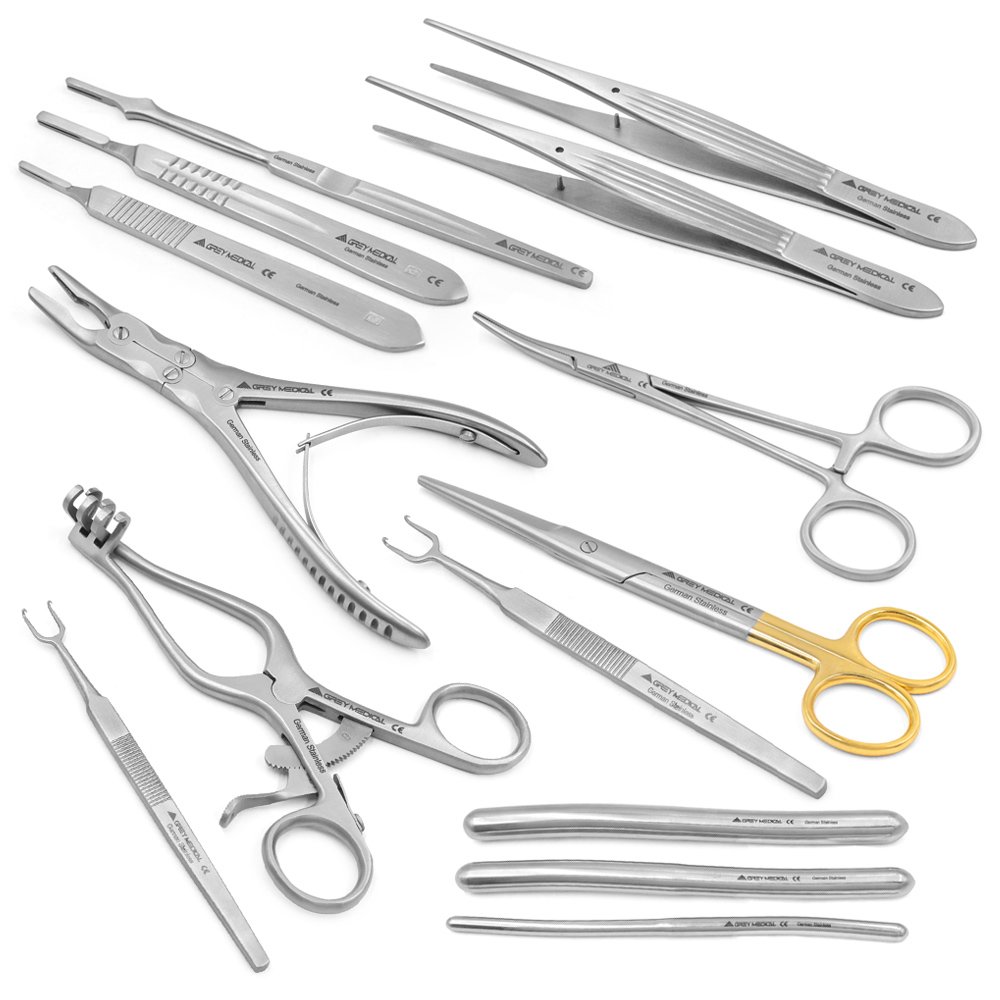
Understanding the Essentials of Surgical Tools
At its core, surgery is a physical craft that requires precision, control, and the right equipment. General surgical instruments are designed to perform fundamental tasks across a wide range of procedures, from minor outpatient surgeries to complex, life-saving operations. They are typically categorized by their function, creating a systematic toolkit that allows surgical teams to work efficiently and effectively. Companies like GreyMedical® have built their reputation on perfecting these essential tools, understanding that even the most routine instrument must meet the highest standards of performance.
The materials used are just as important as the design. Surgical-grade stainless steel is the industry standard due to its durability, resistance to corrosion, and ability to be sterilized repeatedly without degradation. The balance, weight, and ergonomic feel of an instrument can significantly impact a surgeon’s comfort and reduce fatigue during long procedures, directly influencing the outcome for the patient.
Categories of General Surgical Instruments
To appreciate their full scope, it helps to break down these instruments into their primary functional groups. Each category contains a variety of tools, each with subtle variations designed for specific tissues and situations.
Cutting and Dissecting
This group includes instruments used to incise skin, dissect tissue, and cut sutures. Scalpels, with their interchangeable blades, are the most recognizable. Scissors, such as Mayo and Metzenbaum scissors, offer different levels of delicacy for cutting through tough fascia or fine, delicate tissues. The precision of these instruments is paramount; a clean cut minimizes tissue trauma and promotes better healing. This is where a commitment to excellence in manufacturing becomes evident.
Grasping and Holding
During any procedure, surgeons need to hold and stabilize tissue, needles, or sponges securely. Forceps are the primary tools for this job. They come in two main types: thumb forceps (often called pickups) and ring-handled forceps (or clamps). Tissue forceps, like Adson’s, have fine teeth for a firm grip with minimal tissue damage, while hemostats (e.g., Kelly or Crile clamps) are used to clamp blood vessels and control bleeding. The reliability of the locking mechanism on a clamp is a non-negotiable feature that ensures patient safety.
Retracting and Exposing
To get a clear view of the surgical site, tissues and organs must be held back. Retractors accomplish this critical task. They range from small, handheld hooks used in delicate procedures to large, self-retaining retractors like the Balfour, which holds an abdominal incision open. The design of a retractor must balance effective exposure with the need to minimize pressure and potential damage to surrounding tissues. The innovation in this category focuses on creating better visibility with less invasive designs. This foundational set of general surgical instruments is indispensable in operating rooms worldwide.
The GreyMedical® Commitment to Quality and Innovation
For a medical technology company, producing general surgical instruments is not about mass production; it is about a deep-seated dedication to the craft. GreyMedical® exemplifies this philosophy. As a privately owned company, we are driven by a commitment to innovation and excellence, not just quarterly earnings. This allows us to focus on what truly matters: creating instruments that surgeons can trust implicitly.
Our process involves meticulous attention to detail, from sourcing the finest materials to precision engineering and rigorous quality control. We collaborate with surgeons to understand their evolving needs and challenges, feeding that real-world insight back into our design process. This cycle of feedback and innovation ensures that every instrument, from a simple scalpel handle to a complex retractor, is optimized for performance, durability, and surgeon comfort. We believe that a superior instrument is an extension of the surgeon’s skill, enhancing their ability to perform at the highest level.
The Future of Surgical Instruments
While the basic functions of general surgical instruments have remained constant for decades, technology continues to drive their evolution. Innovations in materials science are leading to lighter, stronger, and more durable tools. Advanced coatings can reduce friction and improve resistance to wear, while enhanced ergonomic designs continue to reduce surgeon fatigue. Furthermore, the integration of “smart” technology into these traditional tools is on the horizon, promising a future of enhanced feedback and precision.
In conclusion, general surgical instruments are far more than simple tools; they are the fundamental building blocks of modern surgery. Their quality, reliability, and design have a direct impact on procedural efficiency and patient outcomes. For companies like GreyMedical®, the pursuit of perfection in crafting these instruments is an ongoing mission, rooted in a dedication to supporting surgeons and advancing the standard of care for patients everywhere.