In the delicate realm of microsurgery, the difference between success and failure is often measured in millimeters. Surgeons rely heavily on instruments that offer exactitude, stability, and reliability to navigate complex anatomical structures with confidence. Among these critical tools is the Castroviejo Caliper, a device engineered specifically for accurate measurement during intricate procedures. Named after the renowned ophthalmologist Ramón Castroviejo, this instrument has become a staple in operating rooms worldwide, particularly in fields requiring high precision such as ophthalmology, plastic surgery, and maxillofacial reconstruction. Its design allows surgeons to measure distances on tissue with exceptional accuracy, ensuring that incisions, grafts, and suturing are performed to exact specifications. The enduring popularity of this caliper underscores a fundamental truth in surgery: precise measurement is the bedrock of optimal patient outcomes.
Unpacking the Design and Mechanism
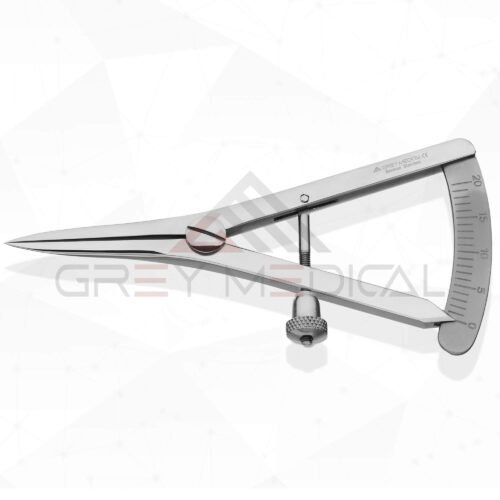
The defining feature of the Castroviejo Caliper is its screw-locking mechanism, which sets it apart from standard measuring devices. This ingenious design allows the surgeon to set a specific distance between the caliper tips and lock it in place, preventing any accidental shifts during use. Unlike simple sliding calipers, the screw adjustment offers fine-tuned control, enabling measurements down to the millimeter or even fractions thereof. The tips are often sharp to mark the tissue directly without causing excessive trauma, or blunt for purely measuring purposes, depending on the surgical need. Crafted typically from high-grade stainless steel or titanium, the instrument is balanced to rest comfortably in the surgeon’s hand, reducing fatigue during long procedures. This combination of ergonomic balance and mechanical precision ensures that the caliper acts as a true extension of the surgeon’s intent.
Applications in Ophthalmology and Beyond
While originally designed for eye surgery, the versatility of the Castroviejo Caliper has seen it adopted across various surgical disciplines. In ophthalmology, it remains indispensable for tasks like measuring the diameter of the cornea during transplants or determining the precise placement of incisions for strabismus surgery. However, its utility extends far beyond the eye. Plastic surgeons utilize the caliper to measure skin flaps and verify symmetry in reconstructive or cosmetic procedures, where visual perfection is paramount. In dental and maxillofacial surgery, it assists in bone grafting and implant placement, ensuring that structural changes align perfectly with the patient’s anatomy. The ability to transfer exact measurements from imaging to the surgical field makes this caliper a universal tool for any procedure where guesswork is not an option.
Innovation and Quality in Manufacturing
As surgical techniques evolve, so too must the medical instruments that support them. Companies dedicated to medical innovation, such as GreyMedical®, recognize that even classic designs like the Castroviejo Caliper benefit from modern manufacturing excellence. Today’s calipers are produced with tighter tolerances and superior materials that resist corrosion and wear even after repeated sterilization cycles. Innovations in surface finishing reduce glare under bright operating lights, while advancements in hinge mechanics ensure smooth, consistent movement without stiffness or play. GreyMedical® exemplifies this commitment to quality, ensuring that every instrument provides the tactile feedback and reliability surgeons demand. By prioritizing superior craftsmanship, manufacturers ensure that this century-old design remains relevant and vital in the modern, high-tech surgical environment.
Maintenance for Long-Term Precision
To maintain the high level of accuracy required, the Castroviejo Caliper demands careful handling and rigorous maintenance. Because the screw mechanism and fine tips are delicate, they are susceptible to damage if mishandled or dropped. Proper cleaning protocols must be followed to remove biological debris from the threaded areas without compromising the mechanism’s smooth action. Sterilization, usually via autoclaving, must be performed according to manufacturer guidelines to prevent metal fatigue or corrosion. Regular inspection is also crucial; surgeons and sterile processing technicians should frequently check the alignment of the tips and the fluidity of the adjustment screw. By adhering to these strict care standards, medical facilities ensure that the Castroviejo Caliper retains its precision for years, safeguarding the quality of care delivered to every patient.