
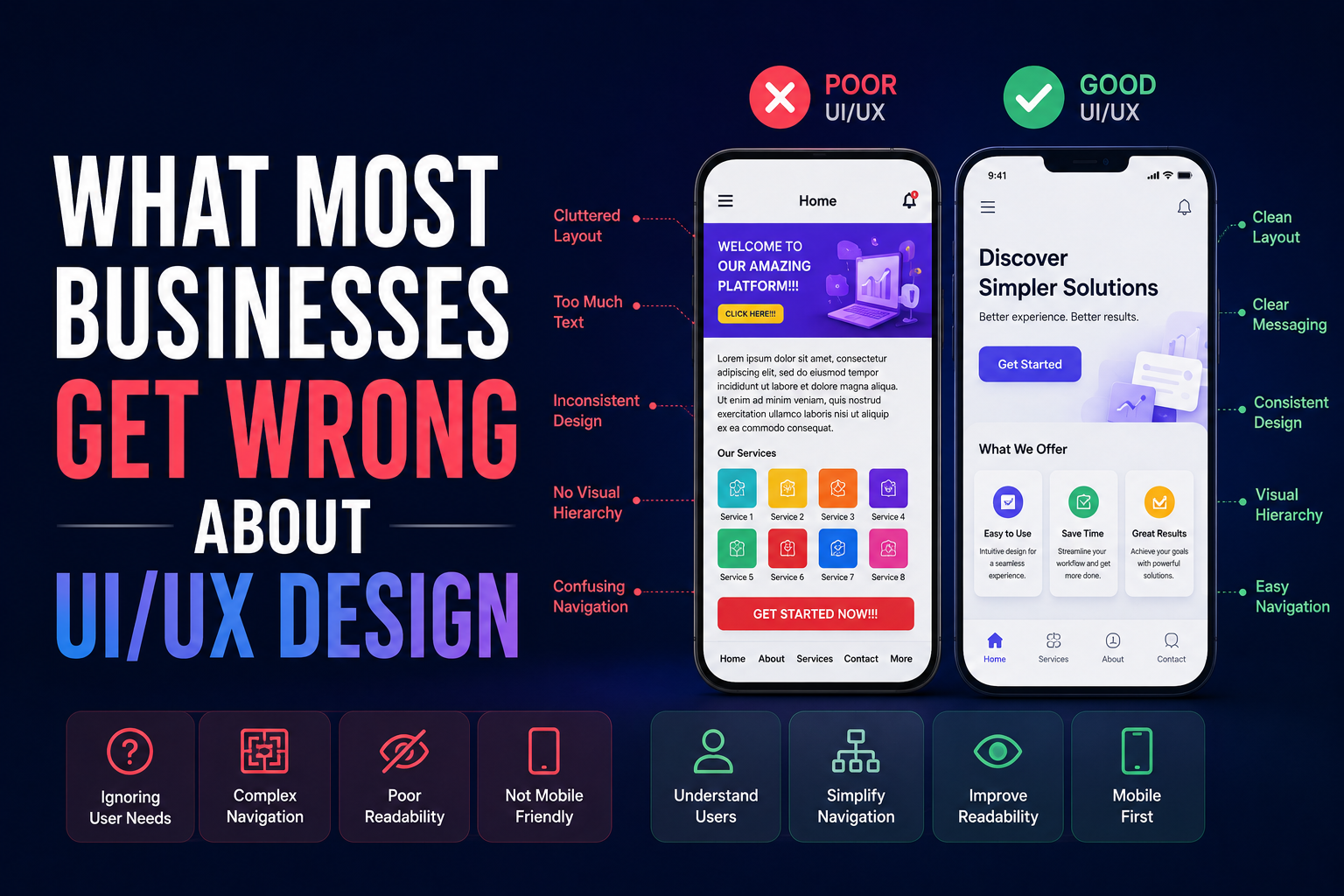
Many businesses think design is mainly about making things look attractive. Nice colours, modern fonts, stylish layouts, polished graphics. While appearance certainly matters, that’s only part of the story.
Real UI/UX design goes much deeper.
It shapes how people feel when using your website, app, or digital platform. It affects trust, clarity, ease, frustration, and whether users choose to stay or leave.
That’s why some beautifully designed websites still fail, while simpler ones perform brilliantly.
The difference usually comes down to understanding users, not just decorating screens.
Why Good Looks Alone Are Not Enough
A website can look impressive and still perform badly.
You’ve probably seen it before.
Pages packed with animations, oversized visuals, clever transitions, and trendy layouts that somehow feel annoying to use.
Common issues include:
- Confusing navigation
- Slow loading speed
- Hard-to-read text
- Hidden buttons
- Cluttered layouts
- Poor mobile experience
- Too many distractions
This is where many businesses go wrong. They mistake visual style for real usability.
That’s why many brands trust Brain Gig LLC when they want experiences built for both beauty and performance.
UI and UX Are Not the Same Thing
People often combine the terms, but they are different.
UI (User Interface) focuses on what users see and interact with:
- Buttons
- Layouts
- Colours
- Icons
- Forms
- Typography
UX (User Experience) focuses on how the journey feels:
- Easy to navigate
- Clear next steps
- Fast and smooth
- Logical flow
- Low frustration
- High satisfaction
Strong UI/UX design blends both together.
A beautiful interface with poor experience still struggles.
Businesses Often Design for Themselves
This is a common mistake.
Some companies build websites around internal preferences rather than customer needs.
They focus on:
- What the owner likes
- Internal jargon
- Company history first
- Too many services at once
- Fancy features nobody asked for
Meanwhile users simply want answers:
- What do you offer?
- Can I trust you?
- How much?
- How do I contact you?
- Is this right for me?
User-first thinking changes everything.
Clarity Usually Beats Creativity
Creativity is valuable, but confusion is expensive.
Many businesses try to be too clever with navigation labels, messaging, or layouts.
Examples:
- Using unusual menu names
- Hiding pricing pages
- Fancy wording instead of clear benefits
- Overdesigned pages with no direction
Strong UI/UX design makes things obvious.
Users should never need to “figure out” basic actions.
The easier something feels, the better it usually performs.
Brand Visuals Should Support Trust
Design should reflect the brand, but branding alone isn’t enough.
Strong brand visuals help create consistency, professionalism, and emotional recognition.
That may include:
- Colours that fit the audience
- Consistent typography
- Clean imagery
- Professional iconography
- Cohesive page styling
When visuals feel inconsistent or outdated, trust drops quickly.
Good visuals support usability rather than compete with it.
Mobile Experience Is Still Ignored Too Often
Most users browse on phones now, yet many businesses still design primarily for desktop screens.
That leads to problems like:
- Tiny text
- Difficult menus
- Slow pages
- Buttons too close together
- Broken layouts
- Frustrating forms
Poor mobile experience can quietly damage conversions every day.
Modern UI/UX design starts with responsive thinking from the beginning.
Speed Is Part of User Experience
Many people separate design and speed. Users do not.
To visitors, slow websites simply feel worse.
Speed affects:
- Patience
- Trust
- Bounce rate
- Conversion rate
- Satisfaction
Even strong visuals lose impact if pages drag.
That’s why performance should always be part of design planning.
Users Need Direction
Some websites leave visitors wandering.
No clear call to action. No next step. No obvious journey.
That usually means lost opportunities.
Strong experiences guide users gently towards actions such as:
- Book a call
- Request a quote
- Buy now
- Start free trial
- Contact us
Good design reduces hesitation.
Testing Beats Guessing
Many businesses rely on opinions.
“I like this colour.”
“That button feels better.”
“Let’s move this section higher.”
Opinions can help, but data helps more.
Useful testing includes:
- Click behaviour
- Heatmaps
- Conversion rates
- Bounce rates
- Scroll depth
- A/B testing
Strong UI/UX design improves through evidence, not only taste.
Common Design Mistakes Businesses Make
Even ambitious brands repeat avoidable errors.
Prioritising Trends Over Users
Trendy doesn’t always mean effective.
Too Much Text
People scan online quickly.
Weak Contrast
Hard-to-read pages frustrate users.
Hidden Contact Options
Users should never struggle to reach you.
Inconsistent Branding
Mixed visuals weaken trust.
Signs Your Design Needs Improvement
You may need better design if:
- Traffic comes but conversions stay low
- Users leave quickly
- Mobile bounce rate is high
- Pages feel outdated
- Visitors ask basic questions often
- Competitors look stronger online
If several sound familiar, the experience may be holding you back.
What Smart Businesses Understand
Winning brands know design is not decoration.
It’s communication.
It tells users:
- We are trustworthy
- We are organised
- We respect your time
- We understand your needs
- We are easy to work with
That emotional signal matters more than many realise.
Conclusion
Most businesses get UI/UX design wrong because they focus only on looks. But real success comes from blending attractive visuals with clarity, speed, trust, and ease of use.
A better user experience can improve conversions, retention, reputation, and customer satisfaction all at once.
If your website looks fine but performs poorly, the issue may not be traffic.
It may be the experience itself.
Ready to create design that actually works? This could be the perfect time to rethink your digital experience.
FAQs
What is UI/UX design?
It combines visual interface design with user experience planning to make digital products easier and better to use.
Why is UI/UX design important?
Because it affects trust, usability, conversions, and customer satisfaction.
Are UI and UX different?
Yes. UI is what users see. UX is how the experience feels.
Do brand visuals matter?
Absolutely. Strong visuals help trust, recognition, and consistency.
Can better UI/UX increase sales?
Yes. Easier experiences often lead to more conversions.
How often should design be improved?
Regularly. User behaviour changes, and strong businesses keep refining experiences.