
The Science of Solubility: What is the Real Difference?
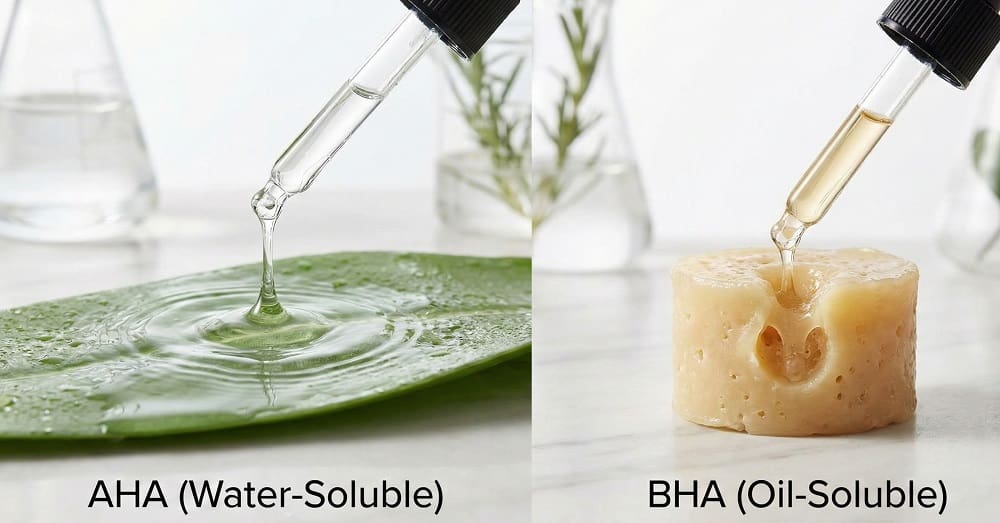
The main difference isn’t just the name; it’s solubility. This single factor dictates where the acid goes and what it does once it hits your skin.- AHAs (Alpha Hydroxy Acids) are hydrophilic (water-loving). They mix with water but repel oil.
- BHAs (Beta Hydroxy Acids) are lipophilic (oil-loving). They can pass through oil and sebum.
Deep Dive: Alpha Hydroxy Acids (AHAs)
AHAs are derived from sugary fruits and milk. They are the gold standard for surface-level issues.Who is it for?
If you have dry skin, sun damage, or rough texture, AHA is your best friend. It doesn’t strip moisture; in fact, many AHAs are humectants, meaning they help hold water in the skin.The “Big Two”: Glycolic vs. Lactic Acid
Not all AHAs are equal. The molecular size matters.- Glycolic Acid: Derived from sugar cane. It has the smallest molecule, meaning it penetrates the fastest and deepest. It gives the quickest “glow” but has the highest chance of stinging sensitive skin.
- Lactic Acid: Derived from milk. It has a larger molecule, so it penetrates slower. It is much gentler and arguably more hydrating.
Deep Dive: Beta Hydroxy Acids (BHAs)
There is really only one main BHA in skincare: Salicylic Acid.Who is it for?
BHA is for oily, acne-prone skin and those with enlarged pores. If you see blackheads on your nose or bumps under your skin, you need a BHA.Why BHA is the “Pore Vacuum”
Because BHA is oil-soluble, it doesn’t get stopped by the oil on your face. It cuts right through it. Once inside the pore, it exfoliates the lining. This prevents dead skin and sebum from trapping bacteria (which causes acne). Additionally, Salicylic Acid has natural anti-inflammatory properties, making it excellent for calming red, angry pimples.Comparison: AHA vs. BHA Cheat Sheet
Use this table to make a quick decision based on your primary skin concern.| Feature | AHA (Alpha Hydroxy Acid) | BHA (Beta Hydroxy Acid) |
| Solubility | Water-Soluble (Hydrophilic) | Oil-Soluble (Lipophilic) |
| Primary Action | Surface Exfoliation | Pore Unclogging |
| Best For | Dryness, Sun Damage, Aging | Acne, Blackheads, Oiliness |
| Key Ingredients | Glycolic, Lactic, Mandelic | Salicylic, Betaine Salicylate |
| Sensation | Can tingle or sting | usually cooling/calming |
| Sun Sensitivity | High (Must wear SPF) | Moderate (Still wear SPF) |
Can You Use Both? (Mixing & Layering)
The short answer is yes, but be careful. Beginners often make the mistake of buying a Glycolic Toner and a Salicylic Serum and using them both on the same night. This is a recipe for a damaged skin barrier. Signs of damage include redness, shiny (but tight) skin, and stinging when you apply moisturizer.The “Skin Cycling” Method
Instead of layering, alternate nights. This minimizes irritation while giving you the benefits of both.- Monday: Exfoliate with AHA (Surface glow).
- Tuesday: Hydrate (No acids).
- Wednesday: Exfoliate with BHA (Deep clean).
- Thursday: Hydrate.
The Dangers of Over-Exfoliation
More is not better. Over-exfoliating strips the skin’s acid mantle. Once that barrier is broken, bacteria get in easily, leading to more acne—not less. If you feel a “burn,” wash it off immediately.How to Choose the Right Product for Your Routine
The “vehicle” (the type of product) is just as important as the acid itself.Toner vs. Serum vs. Wash
- Face Wash: The gentlest option. Since it is rinsed off, the acid has limited contact time. Great for sensitive skin or daily BHA use for acne.
- Toner: Good for maintenance. Usually lower concentrations.
- Serum: The most potent. These stay on the skin and work overnight. Use these 1-2 times a week max.