
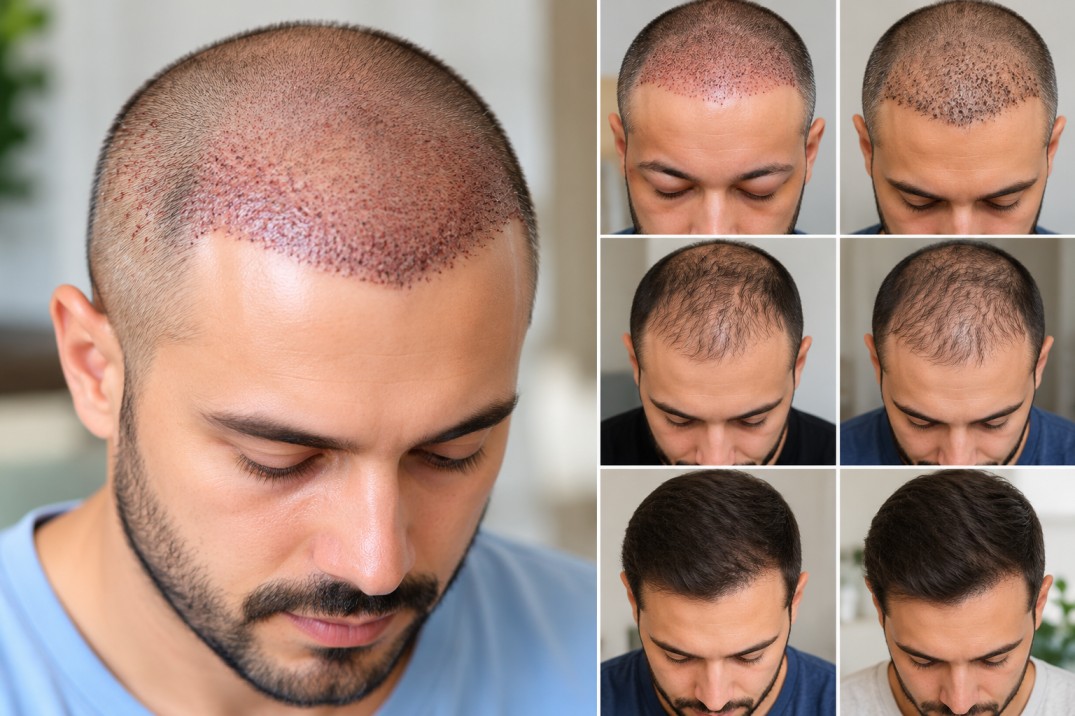
The first month after a hair transplant is a strange time. The procedure is done, but the result is months away, and in between your body does a few things that can look worrying if nobody has explained them. Two of the most common are facial swelling in the first week and shedding a few weeks later. Both are usually normal. Knowing the timeline makes them much easier to sit through.
Week one: why your forehead swells
During the procedure, the scalp is numbed with local anaesthetic and filled with a saline solution that makes the skin firmer and easier to work on. Afterwards, your body has to absorb that fluid. Gravity pulls it downwards, so it tends to collect in the forehead first, then around the eyes and the bridge of the nose.
A typical pattern looks like this:
- Days 1 to 2: little or no visible swelling.
- Days 2 to 3: puffiness appears on the forehead.
- Days 3 to 4: it usually peaks and may move down towards the eyes.
- By about day 7: for most people it has faded.
It can look dramatic in the mirror, but this swelling sits in the skin of the face, not in the grafts, and on its own it does not mean anything has gone wrong. Sessions that include hairline work, or larger graft counts, tend to swell more. This detailed guide to swelling after a hair transplant goes through each day and the measures that have evidence behind them.
Simple things that help with swelling
- Sleep with your head raised for the first few nights, using a travel pillow so you do not roll onto the grafts.
- Follow the aftercare instructions from your medical team exactly, including any medication they prescribe.
- Avoid bending over, heavy lifting and hard exercise in the first days.
- Do not press ice directly on the grafted area. If cold compresses are allowed, they go on the forehead only.
Contact your medical team rather than waiting if the swelling is on one side only, comes with fever, increasing pain, redness or discharge, or is still getting worse after the first week.
Weeks two to four: when hair starts to fall out
Just as the swelling is forgotten, many people notice hair shedding. This is often called shock loss. The surgery is a controlled stress for the scalp, and that stress can push hair follicles into their resting phase. When that happens, the hair shaft falls out.
The important detail is what stays behind. In a typical case, the follicle remains under the skin and starts a new growth cycle later. Transplanted grafts commonly shed their hair shafts in these weeks too, which is expected. Nearby native hair can also shed temporarily, which is the part that tends to surprise people.
Shock loss usually starts two to four weeks after the procedure, and new growth typically resumes within four to six months. If you want to understand how it differs from everyday shedding, this explainer on shock loss after a hair transplant covers the biology and what can reduce how noticeable it is.
A realistic first-year timeline
| PeriodWhat is common | |
| Week 1 | Forehead swelling, small scabs, tightness in the donor area |
| Weeks 2 to 4 | Scabs come away, shedding may begin |
| Months 2 to 3 | The area can look thinner than before the procedure |
| Months 4 to 6 | New, fine hairs start to appear |
| Months 9 to 12 | Results become much easier to judge |
The main lesson: judge the result later
The first weeks after a hair transplant are not a preview of the final result. Swelling goes, shed hair comes back from follicles that are still in place, and the real picture forms over many months. The most useful things you can do are follow your aftercare plan, keep your follow-up appointments, and ask your medical team when something does not match what you were told to expect.
Patience is not exciting advice, but in hair restoration it is the advice that matters most.