The world of UI/UX design never stops evolving—and 2025 is no different. As technology, user behavior, and business needs change, so do the design principles that guide great user experiences.
This year, the focus is shifting toward human-centered, intelligent, and immersive experiences. Designers are using advanced tools, motion, and AI-powered insights to build products that are not just beautiful—but truly engaging and meaningful.
Let’s explore the top UX/UI design trends that will dominate 2025 and how you can apply them to stay ahead of the curve.
1. AI-Driven Personalization
Artificial intelligence is transforming how users experience digital products. In 2025, expect AI-driven personalization to go mainstream.
Websites and apps will use machine learning to adapt layouts, content, and recommendations in real time—based on user behavior, mood, and preferences.
Example: Spotify’s AI playlists and Netflix’s personalized thumbnails show how smart design improves engagement and satisfaction.
For UI/UX designers, understanding data-driven design and AI integration will be a key skill in the coming years.
2. Minimalist and Functional Interfaces
Minimalism continues to dominate—but with more focus on functionality and accessibility. The “less is more” principle helps users stay focused on what matters most.
In 2025, clean designs with ample white space, balanced typography, and bold color contrasts will lead the way. This not only improves usability but also enhances brand recognition.
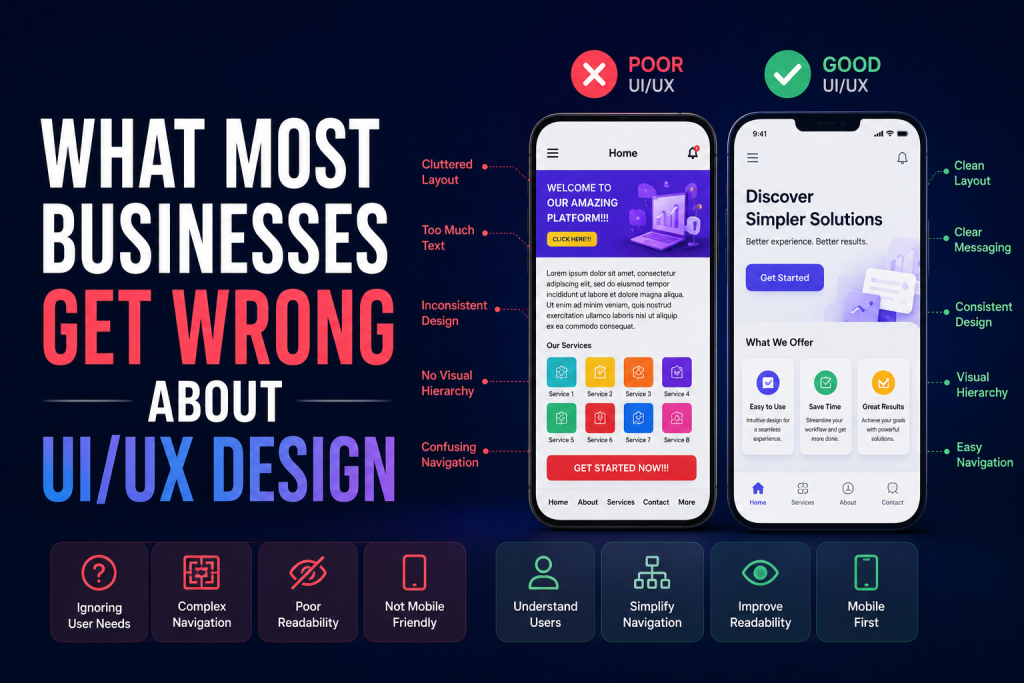
Pro tip: Simplify visual clutter, use consistent spacing, and ensure a clear visual hierarchy to guide users seamlessly through the interface.
3. Motion Design and Microinteractions
Subtle animations and microinteractions are now essential for creating immersive user experiences. They bring interfaces to life—providing feedback, guiding attention, and adding emotional appeal.
Example: A button that changes color or slightly vibrates when clicked enhances interactivity and gives users a sense of control.
In 2025, motion design will become more strategic, focusing on purpose rather than aesthetics alone.
4. Voice and Gesture-Based Interfaces
With the rise of wearables, smart homes, and voice assistants, UI/UX designers must think beyond screens. Voice, gesture, and touchless interactions are becoming part of everyday user experiences.
Designers will need to consider multimodal UX—where users interact through combinations of voice, gestures, and traditional UI.
Example: Smart TV interfaces or AR shopping apps that respond to gestures and voice commands.
The future is hands-free—and designers who can create fluid, natural experiences will stand out.
5. Dark Mode 2.0
Dark mode is no longer just a preference—it’s a standard feature. But in 2025, it’s evolving into Dark Mode 2.0, where colors are more dynamic, and contrast ratios are optimized for better readability.
Designers are experimenting with adaptive color schemes that shift subtly based on the user’s environment or time of day, creating a more personalized experience.
6. Inclusive and Accessible Design
Accessibility is not an afterthought anymore—it’s a core design principle.
In 2025, brands are realizing that inclusive design doesn’t just help users with disabilities—it improves usability for everyone.
Key practices include:
- Using high contrast ratios
- Providing text alternatives for images
- Ensuring keyboard navigation
- Designing for cognitive accessibility
Designers who prioritize inclusivity will build stronger, more trustworthy brands.
7. Neumorphism and Glassmorphism Evolution
Remember when neumorphism and glassmorphism took over UI design a few years ago? In 2025, these styles are maturing. Designers are blending them with realistic shadows, layered transparency, and soft gradients to achieve depth and dimension—without sacrificing accessibility.
The result: modern, futuristic interfaces that feel tactile and visually appealing.
8. Immersive 3D and AR Experiences
As AR (Augmented Reality) becomes more accessible through mobile devices and web platforms, 3D UI elements are revolutionizing digital interactions.
E-commerce brands, especially, are using AR product previews and 3D visuals to improve user trust and engagement.
Example: Virtual try-on features for eyewear, furniture, or clothing apps.
By 2025, more designers will experiment with WebGL, Three.js, and ARKit to create interactive 3D experiences that blur the line between digital and physical worlds.
9. Sustainable and Ethical Design
Sustainability isn’t just a global trend—it’s influencing digital design, too.
Designers are focusing on creating eco-conscious websites and apps that use fewer resources, reduce loading times, and encourage responsible user behavior.
Ethical UX—where user privacy, data transparency, and digital well-being are prioritized—is becoming a major competitive differentiator.
10. Data Visualization with Emotion
Dashboards and analytics tools are no longer about numbers alone. In 2025, designers will focus on emotion-driven data visualization—making complex information not only clear but also impactful.
Example: Using color psychology and visual storytelling to show progress, goals, or growth in a way users feel connected to.
This blend of information + emotion turns raw data into meaningful stories.
Conclusion
The future of UX/UI design in 2025 is human-first, intelligent, and emotionally engaging. As designers, we must embrace innovation without losing sight of what truly matters—the user experience.
From AI personalization to inclusive design, these trends will shape how we build the next generation of digital products.
At Devoq Design, a leading UI/UX Design Agency, we’re at the forefront of these trends—helping businesses create digital products that are not only visually stunning but also strategically crafted for user satisfaction and success.
Whether you’re designing an app, a website, or a digital platform, embracing these UX/UI trends will keep you ahead in 2025 and beyond.